(in alphabetical order)
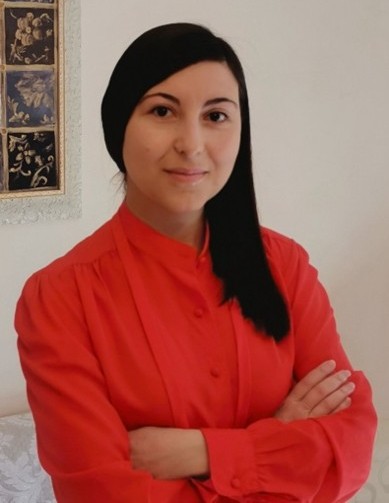 |
Anna Chiaradonna |
|
University of L'Aquila, Italy |
|
“Predicting Earthquake-Induced Excess Pore Water Pressure: A Key to Enhancing Soil Liquefaction Assessment Beyond the Safety Factor Approach” |
|
|
Dr. Anna Chiaradonna is an Assistant Professor in Geotechnical Engineering at the Department of Civil, Construction-Architectural and Environmental Engineering at the University of L'Aquila, Italy. Her research focuses on numerical and experimental studies on seismic soil response, earthquake-induced liquefaction triggering, and ground failure assessment and mitigation strategies. She actively contributes to several high-profile national and international projects, including European H2020 initiatives. Dr. Chiaradonna is a Corresponding Member of the ISSMGE Technical Committee TC203 (Earthquake) and a member of the Italian Geotechnical Society (AGI). Her academic footprint includes international research experiences at prestigious institutions such as the University of Washington, Seattle (2015), the University of California at Davis (2020), and the University of Canterbury, New Zealand (2019). At her home institution, she serves on the Board of the Doctoral Program in Civil, Building-Architectural and Environmental Engineering, and she teaches Earthquake Geotechnical Engineering and Slope Stability in the Master's programs in Civil Engineering. She recently obtained the National Scientific Qualification as a Full Professor. She has co-authored more than 140 scientific publications, including peer-reviewed journal papers, conference proceedings, and a monograph. She supervises doctoral and master’s students in Italy and abroad, and has received international awards and honours, including a Fulbright Scholarship. |
|
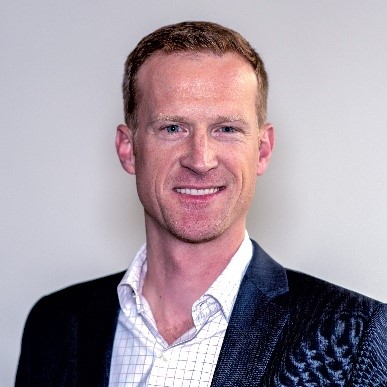 |
Matthew DeJong |
|
University of California, Berkeley, USA |
|
“Multi-fidelity regional simulations to increase seismic resilience” |
|
|
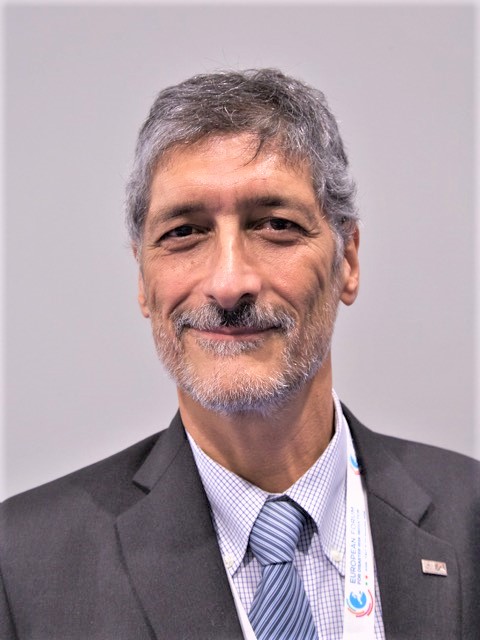
Dr Matthew DeJong is the Ray & Shirley Clough Presidential Chair in Structural Engineering at the University of California, Berkeley. He is currently PI and Co-Director of the NSF-funded NHERI SimCenter (https://simcenter.designsafe-ci.org/), which creates software tools to simulate the effects of natural hazards on the built environment. He is also Co-Director of the UC Berkeley Center for Smart Infrastructure, which utilizes sensing to better understand the performance of local and regional-scale civil infrastructure. Previously, he served as a faculty member at Cambridge University (UK) for 9 years. He has authored more than 200 research publications on topics that include earthquake engineering, structural health monitoring, settlement effects on structures, and historic structures. |
|
 |
Mauro Dolce |
|
Interuniversity consortium ReLUIS, Italy |
|
“Earthquake and Structural Engineering Science for Civil Protection” |
|
|
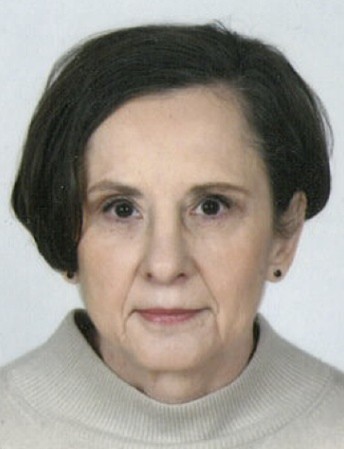
Mauro Dolce is the President of the interuniversity consortium ReLUIS and Professor of Structural Engineering (1994-) at the University of Naples Federico II until 2023. He was Director General at DPC (2006-2021), dealing with the technical management of seismic emergencies and with prevention activities, and was Councilor for Infrastructures and Public Works of Regione Calabria (2021-2023). His research activity concerns Structural and Earthquake Engineering, and Disaster Risk Management. His scientific production, mainly related to structural and earthquake engineering, risk assessment and mitigation, results in about 500 scientific papers and 8 patents. He was Chairman (2015-2021) of the Governing Board of GEM (Global Earthquake Model). He is a member of the Special Committee of the Superior Council of Public Works and of the Scientific Committee for the Bridge over the Strait of Messina. He received the Ambraseys Distinguished Lecture Award from the European Association of Earthquake Engineering (2022). |
|
 |
Tatjana Isaković |
|
University of Ljubljana, Faculty of Civil and Geodetic Engineering, Slovenia |
|
“Force-Based Seismic Design and Assessment of RC Precast Buildings According to the Second-Generation Eurocode 8" |
|
|
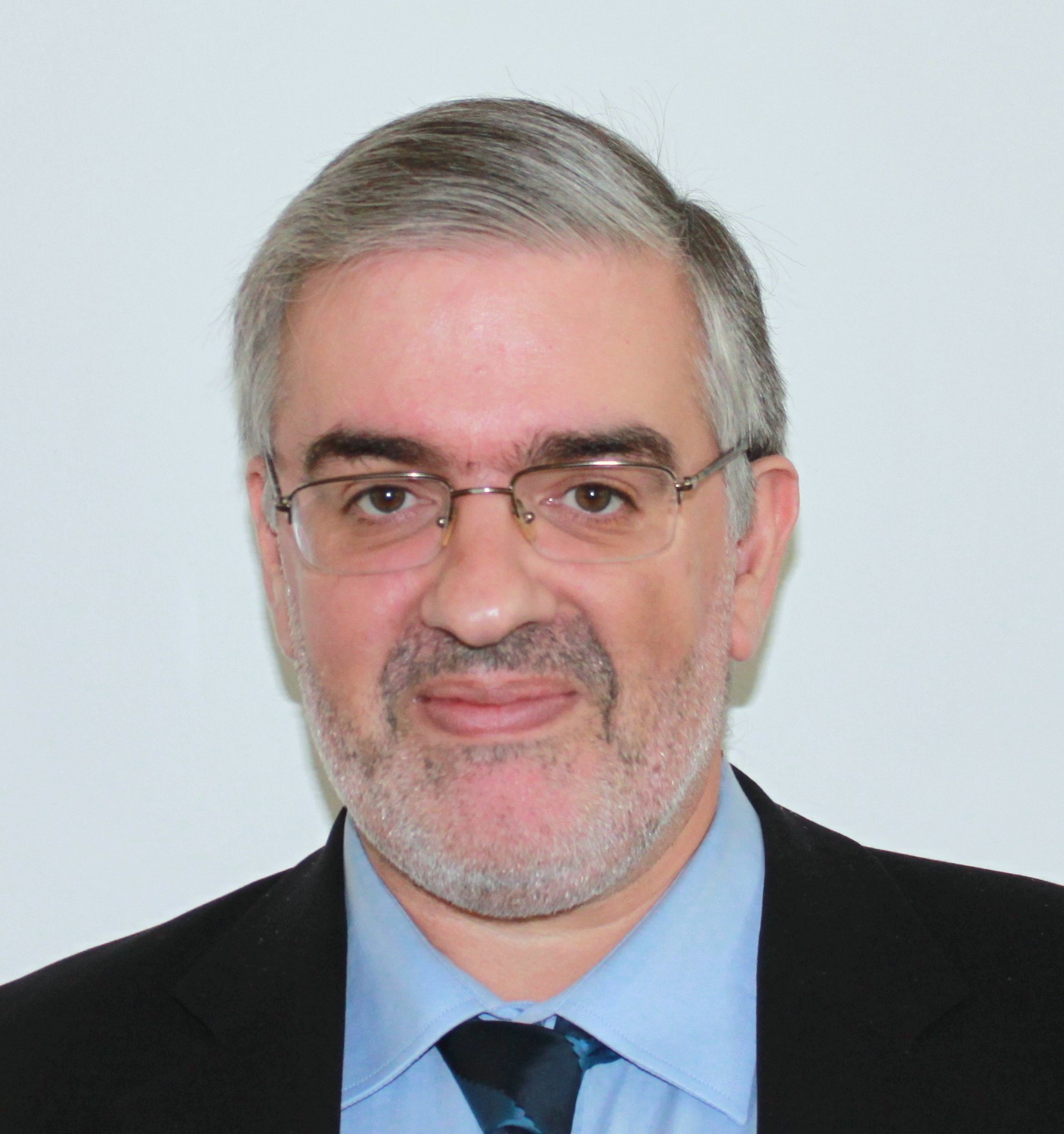
Tatjana Isaković is a Full Professor at the University of Ljubljana, Faculty of Civil and Geodetic Engineering, where she teaches structural analysis, computer-aided structural design, and reinforced concrete structures. Her research focuses on the seismic analysis, design, assessment, and experimental investigation of reinforced concrete structures, including walls, bridges, and precast buildings. Her work also covers seismic retrofitting of existing structures, seismic isolation, and the application of advanced computational methods in structural engineering. She has authored more than 200 scientific and professional publications, including over 60 journal papers, and co-edited Seismic Design and Assessment of Bridges (Springer, 2012). She has participated in numerous national and international projects, with results contributing to ISO standards and the second generation of Eurocode 8. She was also a member of the European project team for Eurocode 8 Part 3 on seismic assessment and retrofitting. Professor Isaković is active in European and international earthquake engineering networks WG11 “Seismic Analysis and Design of Bridges” group of the EAEE and of the International Wall Institute, an international research network led by the University of California, Los Angeles (UCLA). She has supervised many doctoral and master’s students, served as a visiting researcher and lecturer worldwide, and received honours including a Fulbright Scholarship and international awards for seismic-response prediction. |
|
 |
Dimitrios Vamvatsikos |
|
National Technical University of Athens, Greece |
|
“A day, a year, or a lifetime: the essence of time in earthquake engineering” |
|
|
Dr. Vamvatsikos holds the position of Professor at the National Technical University of Athens, where he focuses on integrating structural modeling, computational techniques, probabilistic concepts, and experimental results into a coherent framework for the performance and risk assessment of structures and infrastructure subject to natural and man-made hazards. He has co-operated with leading structural engineering firms, the oil industry, catastrophe risk modelers, and the insurance/reinsurance industry. He has co-authored guidelines for the Applied Technology Council, the Federal Emergency Management Agency, the US National Institute of Standards and Technology, and the Global Earthquake Model Foundation. He is currently involved in the evolution of Eurocode 8, focusing on the seismic design of industrial facilities. |
|